
Data, Trust, and Persistence: The Druva Success Story

Some success stories in technology begin with big budgets, glossy offices, and well-connected founders. Druva’s story doesn’t belong to that category.
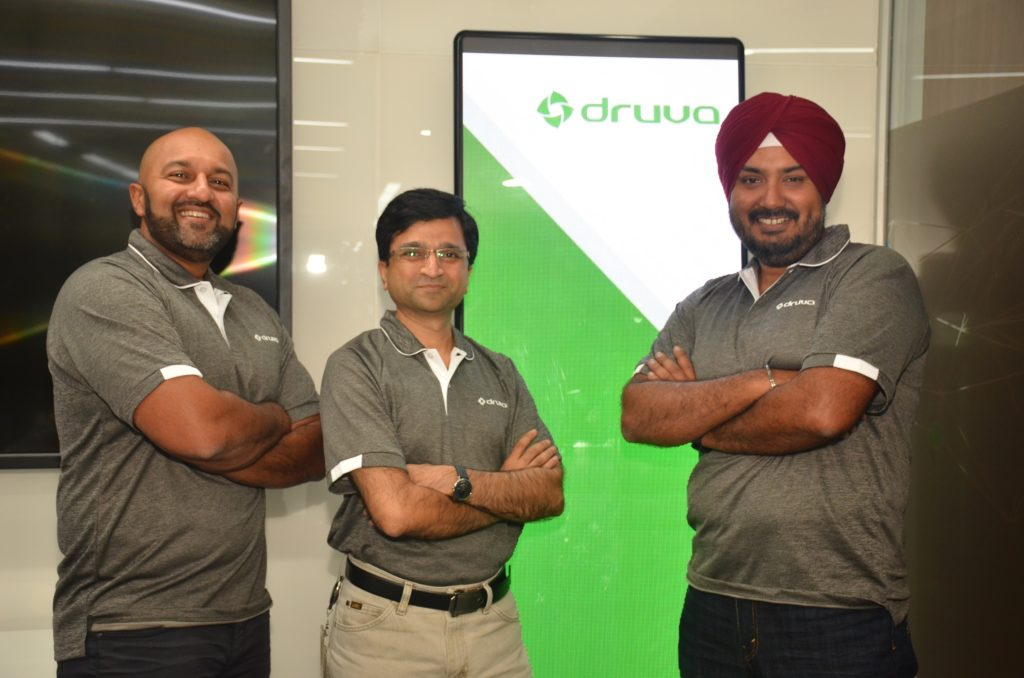
It began in a small apartment in Pune in 2008, when new engineers, Jaspreet Singh and Milind Borate, along with Ramani Kothandaraman, started questioning how the world would protect its most fragile resource: data. At the time, the cloud was an uncertain idea, something many businesses looked at with suspicion.
Trusting vital information to a system that existed somewhere far away, with no server to touch and no machine to see, felt risky to most. But to Jaspreet and Milind, it was not just possible; it was necessary. Druva was born from this conviction.
The company was built around a simple, but powerful goal of protecting data wherever it might live. That meant servers tucked into company basements, laptops carried across continents, or entire infrastructures running in the cloud.
The two founders envisioned a safety net that would sustain and prevail, even when everything else failed. They wanted people to feel safe while bidding adieu to heavy machinery and constant upkeep that had defined traditional storage and backup. In its place, they offered a service that worked quietly in the background, managed entirely through the cloud, and strong enough to withstand unforeseen threats.

As the years passed, Druva’s promise slowly turned into trust. The company grew by solving real problems for real organizations, a path that was completely devoid of any noise or spectacle. Today, it protects the data of thousands of companies worldwide.
What makes the platform stand apart is not only its ability to store and back up information but to keep it isolated from attack. What they protect becomes immune to tampering and instantly recoverable when the stakes are highest.
Druva’s rise might not have been smooth or certain. After all, winning over skeptics, surviving lean years, and showing people a new way of thinking about data required vision and persistence. This post is all about that. Let’s find out how the company became what it is today, and understand the people who shaped it, the choices they made, and the belief that carried them forward.
What Is Druva?
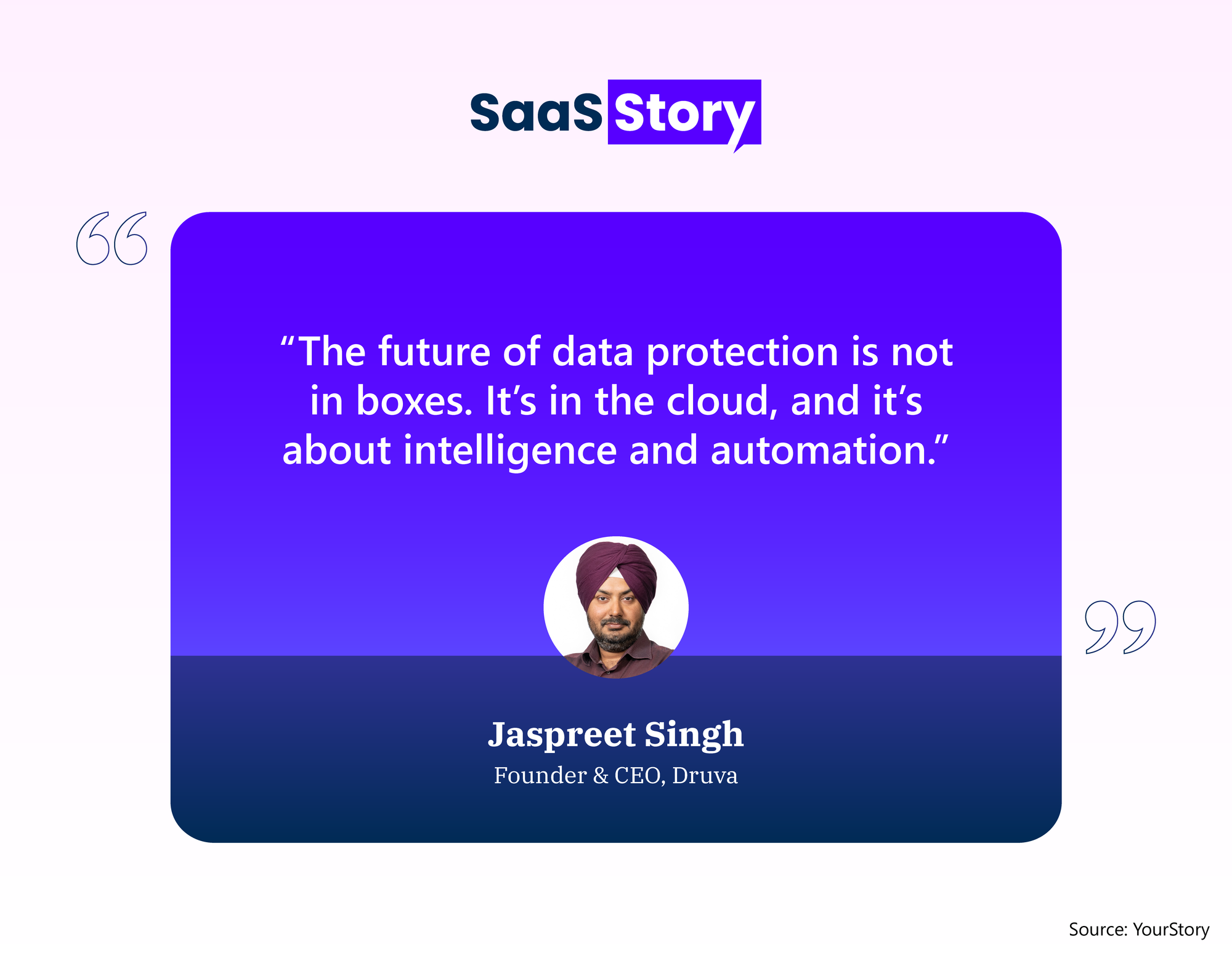
Druva is essentially a cybersecurity company that makes one promise: they’ll keep your data safe, no matter where it lives. That promise sounds simple, but the way it is delivered is what makes Druva different. Businesses do not need to install racks of equipment or spend weeks configuring systems. Instead, they subscribe to a service that adapts as they grow, scales when needed, and quietly does its job while they focus on their own work.
It is a fully managed Software-as-a-Service solution, where customers never have to worry about hardware, scaling, or patching. Everything runs on a cloud-native architecture that is always available, up-to-date, and learning how to defend against the next threat.
The platform’s offerings go beyond storage and backup; they offer complete data resilience. Druva protects your information across environments, be it cloud, on-premises, or the devices at the edge. The data it secures is air-gapped and immutable, which means it cannot be tampered with, deleted, or corrupted.
This technology offers something rare in times when ransomware attacks, human error, and natural disasters can wipe out critical systems in moments. Customers can rest assured knowing that even if the worst happens, their data can be recovered exactly as it was.
Today, Druva is trusted by over 6,000 customers, including 65 of the Fortune 500. It is spread across more than 20 countries and manages over 275 petabytes of data globally. Global enterprises, fast-growing startups, financial institutions, government bodies, and healthcare providers all rely on the platform. They turn to Druva because it removes complexity from a task that is notoriously difficult.
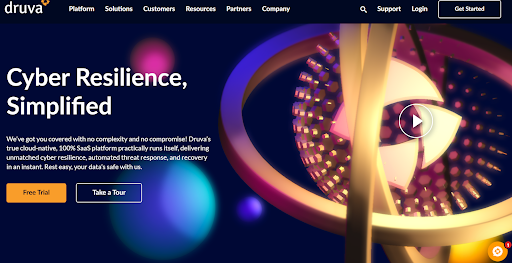
What sets Druva apart in a crowded market is not only its technology but also its vision. Many companies offer backup solutions, but few have built their systems from the beginning with the cloud as their foundation. Druva was one of the first to see that the future of data protection was not tied to physical machines but to flexibility, intelligence, and trust delivered as a service.
This foresight allowed the company to mature into a leader at a time when the world’s reliance on data and the threats against it grew increasingly stronger. Moreover, the company has kept its promise through the years, while constantly adapting to the ever-evolving data landscape.
Having Visionary Founders Matters
A young Jaspreet Singh, son of an Air Force personnel, grew up moving around many parts of India. He later studied computer science at IIT Guwahati and graduated in 2004. He worked first at Ensim Corp., then at Veritas. Those years gave him exposure to enterprise storage, legacy backup systems, and the gap between what enterprises needed and what was being delivered.
Pune-born Milind Borate’s childhood included experiments, curiosity, and a love of science outside the classroom. He was not always a top student, but he read widely, tinkered with projects, and built things that intrigued him. He earned a bachelor’s degree in Computer Science from Pune Institute of Computer Technology and later a Master’s (MTech) from IIT Bombay.
After completing his education, Milind worked at Veritas in India as the Technical Director. He had also founded (and then left) a company called Coriolis Technologies. Ramani handled the HP Veritas partnership department.
The founders met through their work. They realized that many companies were struggling with data loss, recovering deleted files, or protecting endpoint devices. They also noticed that the existing backup tools handled these issues poorly or in complicated ways. The duo believed there was a simpler, more reliable way to protect data, especially as devices multiplied and data started living outside traditional data centers.
Jaspreet’s motivation came from observing how costly, rigid, and complex data backup and disaster recovery were. He saw businesses burdened by infrastructure, maintenance, hardware, patches, and whatnot. Milind’s drive, on the other hand, came from wanting to build things that worked at scale: systems, file systems, tools that could actually be used.
Together, they shared a belief that “cloud-native” could become the foundation for something resilient. In 2008, with pooled savings and conviction, they founded Druva in Pune. They started small with a rented room and early prototype work. Then slowly, through iterations, failures, and small wins, they refined their product, shifted focus to endpoints first, and made choices that set the stage for what Druva is today.
They chose the name Druva deliberately. It is derived from the Sanskrit word “Dhruva,” meaning the North Star. The founders saw the star as something fixed, guiding, always visible. The name reflected their vision: data protection that remains constant, reliable, and a guiding point when disaster strikes.
Disruption Comes with Challenges
From its earliest days, Druva walked a rocky path instead of a paved road. The first big challenge came from funding and market trust. The India of 2008-2010 was very different from what it is today. At the time, a lot of companies didn’t believe in home-grown software to solve big infrastructure problems.
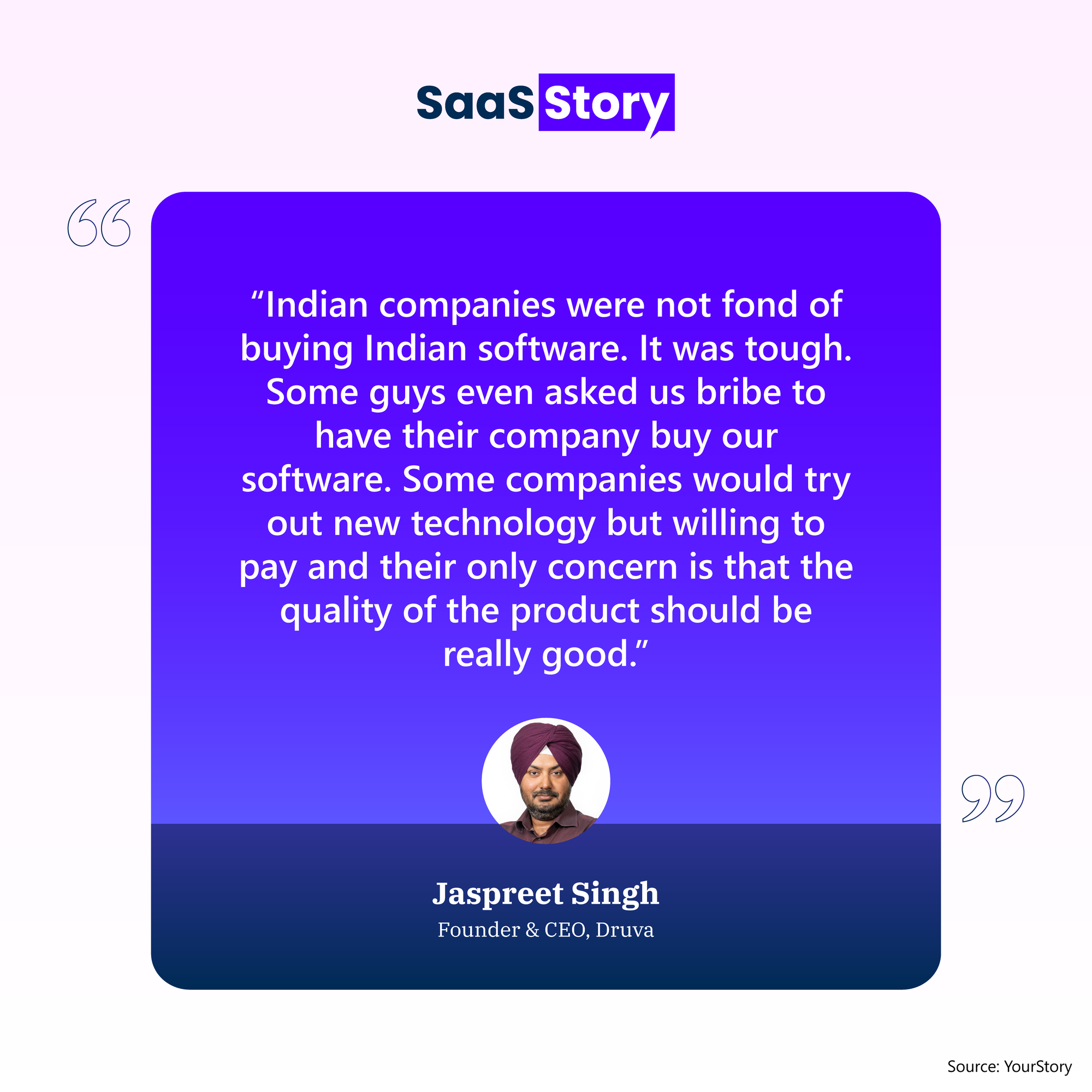
Druva had to prove that its tools could outdo or at least match the established global competitors. Indian firms often preferred already-known brands. Sometimes, Druva faced outright bias: “Indian companies don’t buy Indian software,” Jaspreet Singh once noted.
Further, money was tricky. Their initial funding (angel, then Series A/B) gave enough to build prototypes, but not always enough to scale fast. They had to choose carefully, sometimes reinvesting early gains into R&D instead of broad expansion.
As data protection needs multiplied (more devices, more endpoints, cloud adoption), the pressure to scale globally mounted. If you move too slow, you lose relevance. At the same time, moving too fast could mean spiraling costs. Druva needed to find a balance.
And of course, there’s always competition. Many legacy backup vendors, such as Veritas, EMC, and Symantec already had deep networks, customer trust, and a wide reach. Breaking into that world meant Druva had to offer something markedly different: simplicity, better economics, more agility.
But new entrants often find that enterprise customers expect features (security, compliance, reliability) before trust is given. Druva had to earn that trust through product quality, certifications, and sometimes doing work that lost money in the short run but paid off in credibility.
Technical scaling was yet another hurdle. As customers grew, so did volumes of data, the number of endpoints, and cloud environments. Ensuring that backups remain fast, secure, and immutable—that recovery is reliable—and maintaining compliance across geographies demanded heavy technical investment. Moreover, managing data deduplication, supporting multiple platforms, handling large metadata, scaling operations, and so on came with its own problems.
A regulatory and trust challenge loomed, too. Customers, especially large enterprises and government bodies, asked for certifications (HIPAA, PCI DSS, FedRAMP). Meeting those standards is expensive, slow, and demanding. Druva had to build practices, controls, and audits. While this slowed some product pushes, it also went on to become a differentiator.
The Turning Point
Despite this gauntlet, Druva managed to find and hold its stride. With each successful funding round, for example, $25 million in Series C (2013) and Series D (2014), they built more robust product features. They also grew globally and demonstrated reliability. In 2016, they raised $51 million to accelerate innovation and widen their reach.
By 2019, Druva secured $130 million, pushing its total capital raised over $300M, signaling serious confidence from investors. In 2021, another big round ($147 million) came at a valuation north of $2 billion.
At the same time, revenue showed strength: Druva crossed $100 million in annual recurring revenue. That’s not a small change. It means customers kept renewing, trusting Druva with increasing amounts of their critical data.
As you can see, Druva didn’t just survive the early doubts; it turned them into advantages. Many of the things that once were barriers, including global scale, certifications, and product depth, are now part of what sets Druva apart. The story is a masterclass in not just surviving, but in turning seemingly impossible challenges into stepping stones.
Milestones
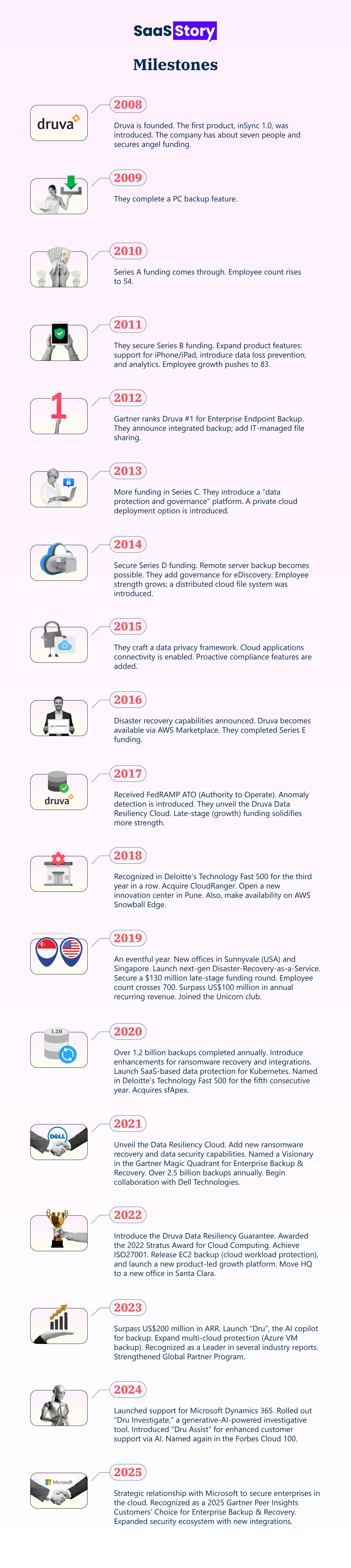
Lessons Along the Way

When you look closely at Druva’s path, you see more than a tech company’s rise. You see the silent realities of building something that lasts. And there are several lessons to take home here.
One of the first lessons is that opportunity often hides in places no one bothers to look.
That choice to focus on the invisible backbone of every enterprise became the foundation of Druva’s strength. How? Back in 2008, data protection didn’t sound glamorous. Startups were chasing apps, social platforms, and mobile trends. But Jaspreet Singh saw the overlooked risk of businesses losing data, their most valuable asset. After that, things were never the same.
Another lesson lies in courage.
Druva went all-in on the cloud even as many businesses continued to depend on physical servers. It wasn’t exactly the safest decision to be making at the time. Investors questioned it, and customers doubted it. But the team believed the world would move there eventually. And when it did, Druva was already waiting with answers.
There’s also the matter of adaptability.
Druva didn’t stop at one product. It shifted, expanded, and rebuilt its offerings as threats evolved, from simple backup solutions to ransomware recovery and AI-driven resilience. The gumption to let go of what worked yesterday in order to build what’s needed tomorrow kept them relevant in a crowded market.
And maybe the deepest lesson is about persistence.
Druva’s founders and team have seen it all. They faced rejection, skepticism, and funding struggles, yet they kept showing up. Their story reflects what their product promises: resilience and the ability to recover no matter how hard the blow.
Overall, Druva teaches us that success doesn’t always roar. Sometimes, it grows steadily, built on choices that seemed risky at the time but turned into the very things that carried the company forward.
Wrapping Up
One cannot ignore Druva’s journey when citing examples of startups that turned doubt into direction, risk into resilience, and vision into reality. The company weathered storms that could have easily sunk it, yet each challenge only sharpened its purpose.
Today, Druva stands as proof that resilience is not only something you build into technology but also something you live through every choice and every challenge. And when matched with persistence, it can redefine the future.
Subscribe to our newsletter.
Be the first to know - subscribe today